Stretching for Beginners
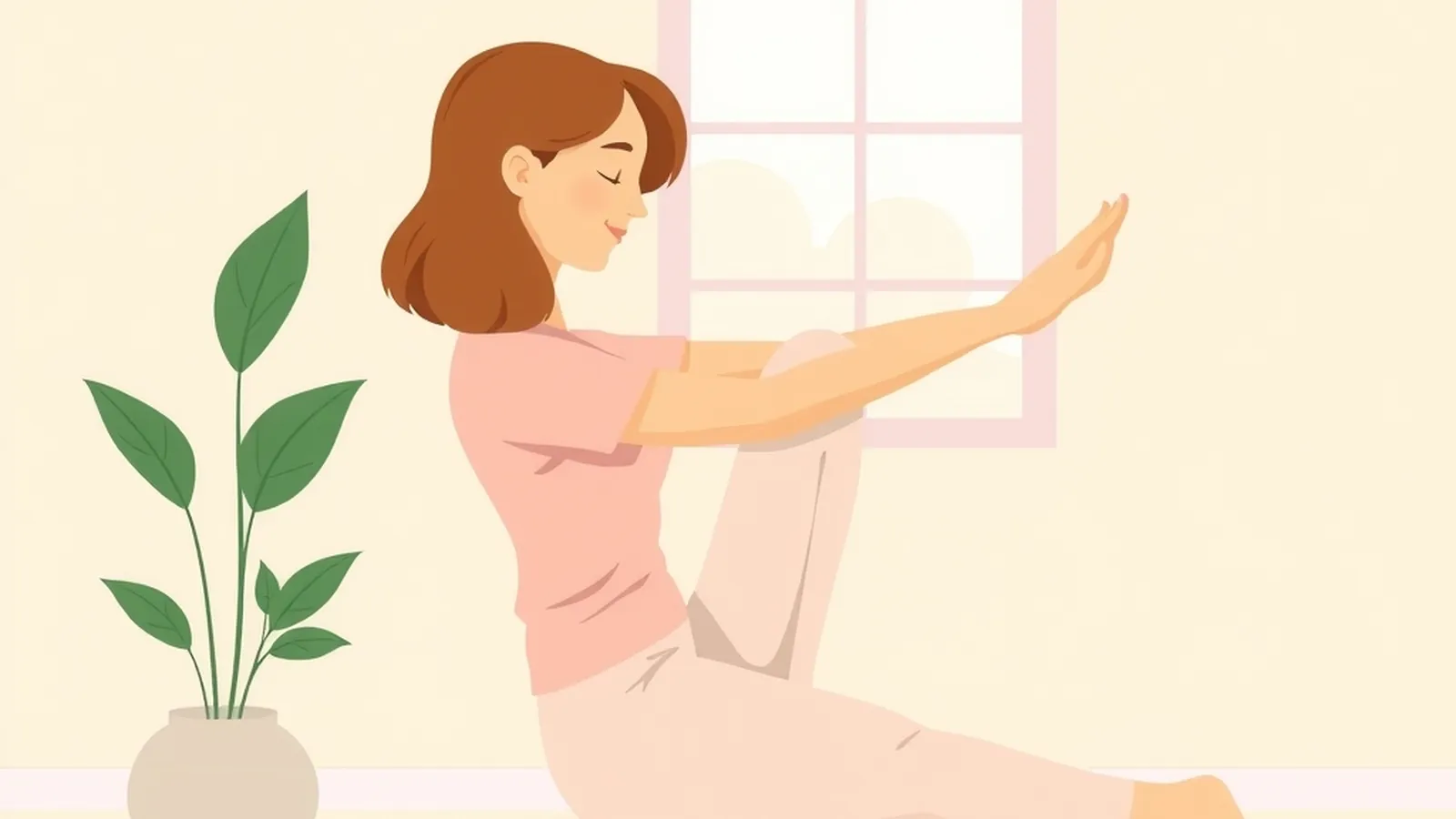
For beginners, stretching works best when it's gentle: move into a position until you feel mild tension, breathe slowly, hold for about 20 to 30 seconds, and ease out. Many people stretch after a walk or workout when their muscles are warm, or as a short routine before bed. The one rule that never changes is that a stretch should never hurt, so don't bounce or force it.
Stretching and mobility work round out the activities in our Movement section, and they're a calm way to start if more intense exercise feels like too much right now.
Stretching versus mobility
The two words get used together, but they mean slightly different things:
| Term | What it is | Example |
|---|---|---|
| Static stretching | Holding a position for a period of time | Holding a calf stretch against a wall |
| Dynamic movement | Moving gently through a range of motion | Slow arm circles or leg swings |
| Mobility | How comfortably your joints move through their range | Rolling your shoulders, turning your torso |
Many people use dynamic movement to warm up and save held stretches for afterward. Either way, gentle is the key word.
Ground rules for safe stretching
- Warm up first. A few minutes of walking or marching in place helps muscles feel ready.
- Aim for mild tension. You should feel a stretch, not pain. If it hurts, ease off.
- Breathe. Slow, steady breathing helps you relax into the position.
- No bouncing. Hold still or move smoothly.
- Respect old injuries. If a joint has been injured or replaced, ask your doctor or a physical therapist which stretches are right for you.
If you have a health condition, are pregnant, or have ongoing joint or back pain, check with your doctor before starting a new stretching routine.
Seven gentle stretches, described
Hold each for about 20 to 30 seconds and do both sides where it applies.
1. Neck side stretch
Sit or stand tall. Gently tilt your right ear toward your right shoulder, keeping your left shoulder relaxed and down. Stop when you feel a mild stretch along the left side of your neck. Breathe, return to center slowly, and switch. Don't roll your head in full circles.
2. Chest opener
Stand in a doorway and place your forearms on the frame at about shoulder height. Step one foot forward gently until you feel a stretch across the front of your chest. Keep your shoulders down and away from your ears.
3. Upper back stretch
Clasp your hands in front of you at chest height. Round your upper back and push your hands forward, letting your head drop slightly. Feel the space open up between your shoulder blades.
4. Standing quad stretch
Hold a wall or chair for balance. Bend one knee and bring that heel toward your buttocks, holding your ankle or pant leg. Keep your knees close together and stand tall. If reaching your ankle is hard, loop a towel around it.
5. Seated hamstring stretch
Sit near the edge of a sturdy chair. Straighten one leg in front of you with the heel on the floor and toes pointing up. Keeping your back long, hinge forward from your hips until you feel a stretch along the back of your thigh. Don't round your spine to reach farther.
6. Calf stretch at the wall
Face a wall with your hands on it. Step one foot back, keep the back heel pressed down and that knee straight, and lean forward gently. For a slightly different stretch lower in the calf, bend the back knee a little.
7. Lying knee-to-chest
Lie on your back with your knees bent. Bring one knee toward your chest and hold behind your thigh. Keep the other foot on the floor. Many people find this a comfortable way to stretch the lower back and hips at the end of the day.
When to stretch
There's no single right time. Here are common options:
- After a walk or workout, when muscles are warm.
- As a short break from sitting, which also helps with stiffness at a desk. Our guide to posture at work pairs well with a few stretches during the day.
- Before bed, as part of a calm wind-down.
- On rest days, as light activity that keeps you moving without much effort.
Example: a five-minute evening routine
Example: Avery, 32, feels stiff after long days on their feet at work. Before bed, they do the knee-to-chest, seated hamstring, and chest opener stretches, about 30 seconds each side, while breathing slowly. It takes about five minutes, and they keep it going by doing it right after brushing their teeth.
What stretching can and can't do
Many people find that regular, gentle stretching helps them feel looser and move more comfortably. It's also a relaxing habit for a lot of people. Stretching isn't a fix for every ache, though. Pain that is sharp, gets worse, comes with numbness or tingling, or follows an injury needs a doctor's attention, not more stretching.
If you ever feel dizzy, have chest pain, or feel severely short of breath during any activity, stop right away and get medical help. Call 911 in an emergency.
Gentle mobility moves to try
Mobility moves are a nice way to loosen up before a walk or after sitting:
- Shoulder rolls. Lift your shoulders up, back, and down in slow circles, five times each direction.
- Torso turns. Stand with feet hip-width apart and gently turn your upper body side to side, letting your arms swing loosely.
- Ankle circles. Hold a chair, lift one foot slightly, and draw slow circles with your toes in each direction.
Fitting stretching into your week
Stretching sits nicely alongside the other parts of an active life:
- After a cardio session, a few stretches make a natural cool-down. Our guide to cardio basics explains how to choose an aerobic activity and judge your effort.
- The circuit in our home workouts guide ends with a short cool-down that uses several of these stretches.
- If you've started and stopped stretching routines before, our guide to staying motivated has ideas for making small habits stick.
Something to try today
Before bed tonight, do the calf stretch at the wall and the lying knee-to-chest, about 30 seconds per side. Breathe slowly the whole time. Notice how your body feels afterward, and whether you'd like to make it a nightly habit.
Want a structured wellness program?
Some people like the structure of a paid program. This button opens a third-party health or wellness program from one of our advertising partners. Its claims are its own, not ours, and haven't been evaluated by us or the FDA. Talk to your doctor before starting any program, diet or supplement, and weigh any offer against our health red flags checklist.
See the partner program →We may be paid when you click. The program shown can change. Read its terms before you buy anything. How this works
Frequently asked questions
Should I stretch before or after exercise?
Many people warm up with easy movement before exercise, like walking or arm circles, and save longer, held stretches for after, when muscles are warm. Both approaches are common, so choose what feels comfortable for you.
How long should I hold a stretch?
A common starting point is about 20 to 30 seconds per stretch, breathing slowly the whole time. You should feel mild tension, never pain.
Is it bad if I'm not flexible?
Not at all. Flexibility varies a lot from person to person, and you don't need to touch your toes to benefit from gentle stretching. Work within your own comfortable range.