Portion Control Tips That Feel Doable
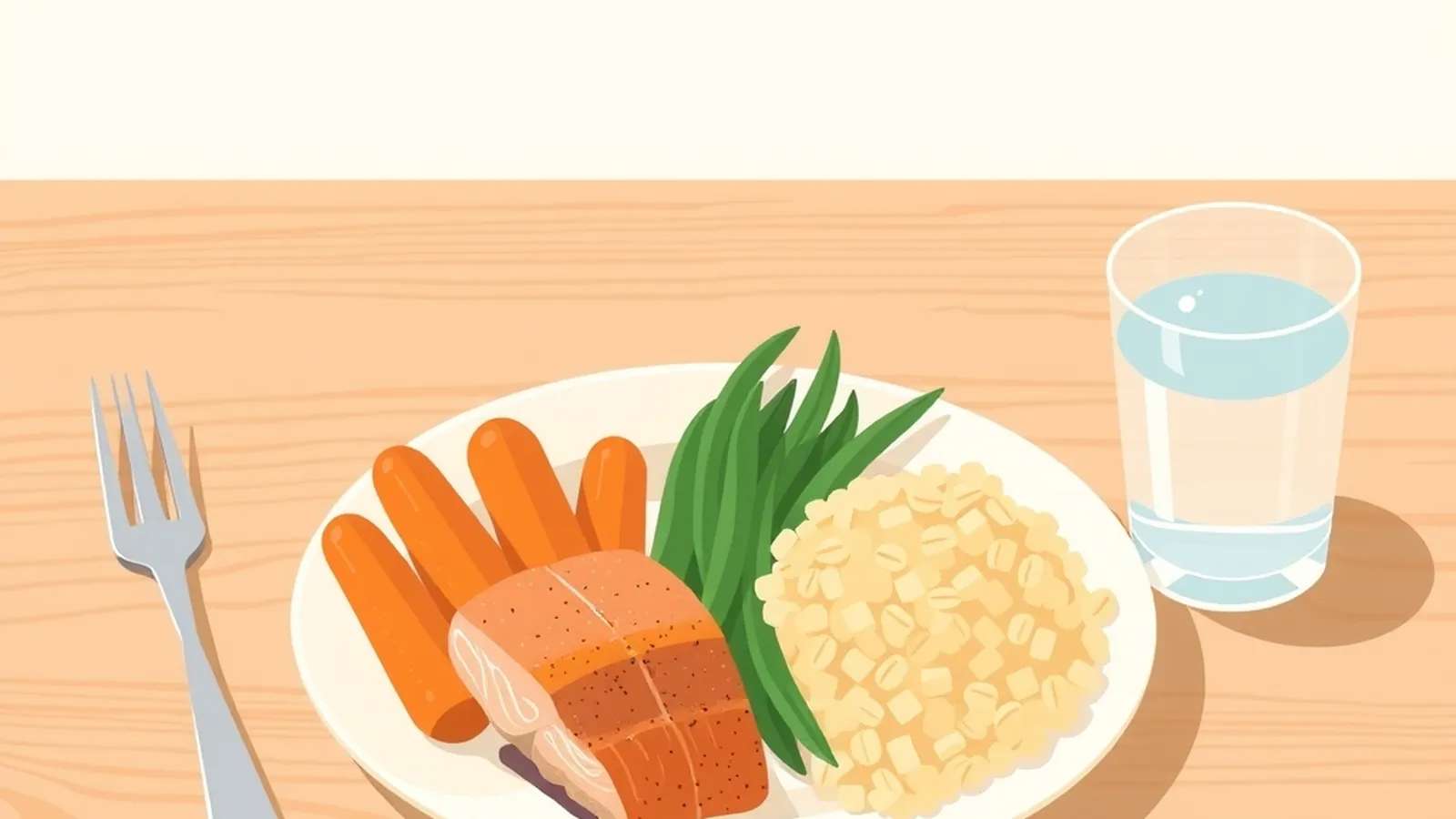
Portion control means choosing amounts of food that leave you satisfied and energized, not stuffed or still hungry. The easiest ways to do it are visual: divide your plate into sections, use your hand as a rough guide, check the serving size on labels, and slow down so you can notice when you've had enough. No scales, apps or strict rules required.
Portions are one of the most practical topics in our Healthy Weight section, because small, flexible changes here are easy to keep.
Why portions drift
Portions creep up for reasons that have nothing to do with willpower:
- Bigger dishes. Larger plates and bowls make a normal amount look small, so it's easy to fill them.
- Package sizes. A bag or bottle often holds more than one serving, but it feels like a single item.
- Restaurant habits. Restaurant meals are often generous, and it's natural to want to finish what you paid for.
- Distraction. Eating while working, scrolling or driving makes it hard to notice fullness.
- Getting too hungry. Skipping meals can lead to eating fast and a lot once food finally arrives.
Knowing these patterns helps you adjust your surroundings instead of relying on discipline.
A few easy tweaks to your space can do a lot of the work for you. Keep serving dishes on the stove or counter instead of the table, so getting more is a choice rather than a reflex. Store tempting snacks out of sight and put fruit where you can see it. Use bowls and plates you like that aren't oversized. None of this is about willpower. It just makes the easier choice the more convenient one.
The plate guide
A balanced plate is a simple visual many people find helpful. It isn't a rule, just a starting point:
| Part of the plate | What goes there | Examples |
|---|---|---|
| About half | Vegetables and fruit | Salad, roasted carrots, green beans, berries |
| About a quarter | Protein foods | Chicken, fish, beans, tofu, eggs |
| About a quarter | Grains or starchy foods | Brown rice, whole wheat pasta, potatoes |
| On the side | Water or another drink, a little fat for flavor | Olive oil, a sprinkle of cheese |
Mixed dishes like stir-fries, soups and casseroles don't split neatly. That's fine. Aim for the general balance across the meal.
Hand guides
Your hand travels with you and roughly matches your body's size, which makes it a handy reference. These are loose rules of thumb, not precise measures:
- Protein foods: about the size and thickness of your palm.
- Grains or starchy sides: about a cupped handful.
- Vegetables: a couple of open handfuls or more.
- Fats like nut butter or oil: about the size of your thumb.
- Snacks like nuts or chips: a small handful, served in a bowl rather than eaten from the bag.
Needs differ by person, activity and appetite, so use these to guide your eye, then adjust based on how you feel afterward.
Serving sizes on labels
The Nutrition Facts label lists a serving size at the top, and all the numbers below it apply to that amount. A few points help:
- Check how many servings are in the package. A single bottle or snack bag can hold more than one.
- Compare the serving size to what you actually eat. Your portion may be bigger or smaller, and that's okay.
- Use the serving size to compare similar products fairly.
Our guide to what calories are explains what those label numbers mean and why you don't have to count them to eat well.
Slow down
Slowing down may be the most useful portion tool of all. Fullness signals take a little while to register, so eating quickly can carry you past "comfortable" before you notice. Try:
- Putting your fork down between bites.
- Sitting at a table rather than eating standing up or on the go.
- Pausing halfway through to check in: "How hungry am I now?"
- Eating with someone and talking between bites.
These ideas overlap with mindful eating, which offers a short practice for paying attention to hunger and fullness without judging yourself.
Snacks and portions
Snacks often get eaten straight from the package, which makes amounts hard to notice. Portioning a snack into a bowl, or pre-packing snacks for the week, helps many people. Pairing something with protein or fiber, like apple slices with peanut butter, tends to be more satisfying. Our guide to healthy snacks has more ideas for planning ahead.
Portion myths to skip
Watch for advice that turns portions into punishment:
- "Always leave food on your plate." You don't need to. Eat until you're comfortably satisfied.
- "Eat tiny meals all day." Some people like grazing; others prefer three meals. Either can work.
- "Smaller is always better." Too-small portions can leave you hungry, low on energy and likely to overeat later.
If a plan tells you to eat very small amounts or ignore hunger, that's one of the fad diet red flags worth knowing.
Example: adjusting a pasta night
This is a fictional example. Jordan loves pasta and usually fills a big bowl. Rather than giving it up, they try serving pasta on a regular dinner plate, filling about half with sautéed vegetables, adding chickpeas for protein, and keeping the pot on the stove instead of the table. They eat slowly and check in halfway. Some nights they go back for more and some nights they don't. Either way, pasta night stays on the menu.
Something small to try today
At your next meal, use a regular-size plate and fill about half of it with vegetables or fruit before adding anything else. Then put your fork down at the halfway point and notice how you feel. You don't have to change anything else.
A gentle note
Portion control should feel like taking care of yourself, not shrinking yourself. If you find yourself ignoring real hunger, feeling guilty after eating, or setting stricter and stricter rules, please talk with your doctor or a licensed therapist. A registered dietitian can also help you find amounts that fit your body and your life.
Want a structured wellness program?
Some people like the structure of a paid program. This button opens a third-party health or wellness program from one of our advertising partners. Its claims are its own, not ours, and haven't been evaluated by us or the FDA. Talk to your doctor before starting any program, diet or supplement, and weigh any offer against our health red flags checklist.
See the partner program →We may be paid when you click. The program shown can change. Read its terms before you buy anything. How this works
Frequently asked questions
What is the difference between a portion and a serving size?
A serving size is the standard amount listed on a Nutrition Facts label. A portion is how much you actually choose to eat, which might be more or less than one serving.
Do I need to measure my food to control portions?
No. Many people use simple visual guides like dividing a plate or using their hand as a rough reference. Measuring for a short time can help you calibrate your eye, but it isn't required.
Is it okay to eat seconds?
Yes. If you're still hungry after a pause, having more is a normal response to hunger. Waiting a few minutes before deciding can help you tell real hunger from habit.